.png&w=3840&q=75)
* All product/brand names, logos, and trademarks are property of their respective owners.
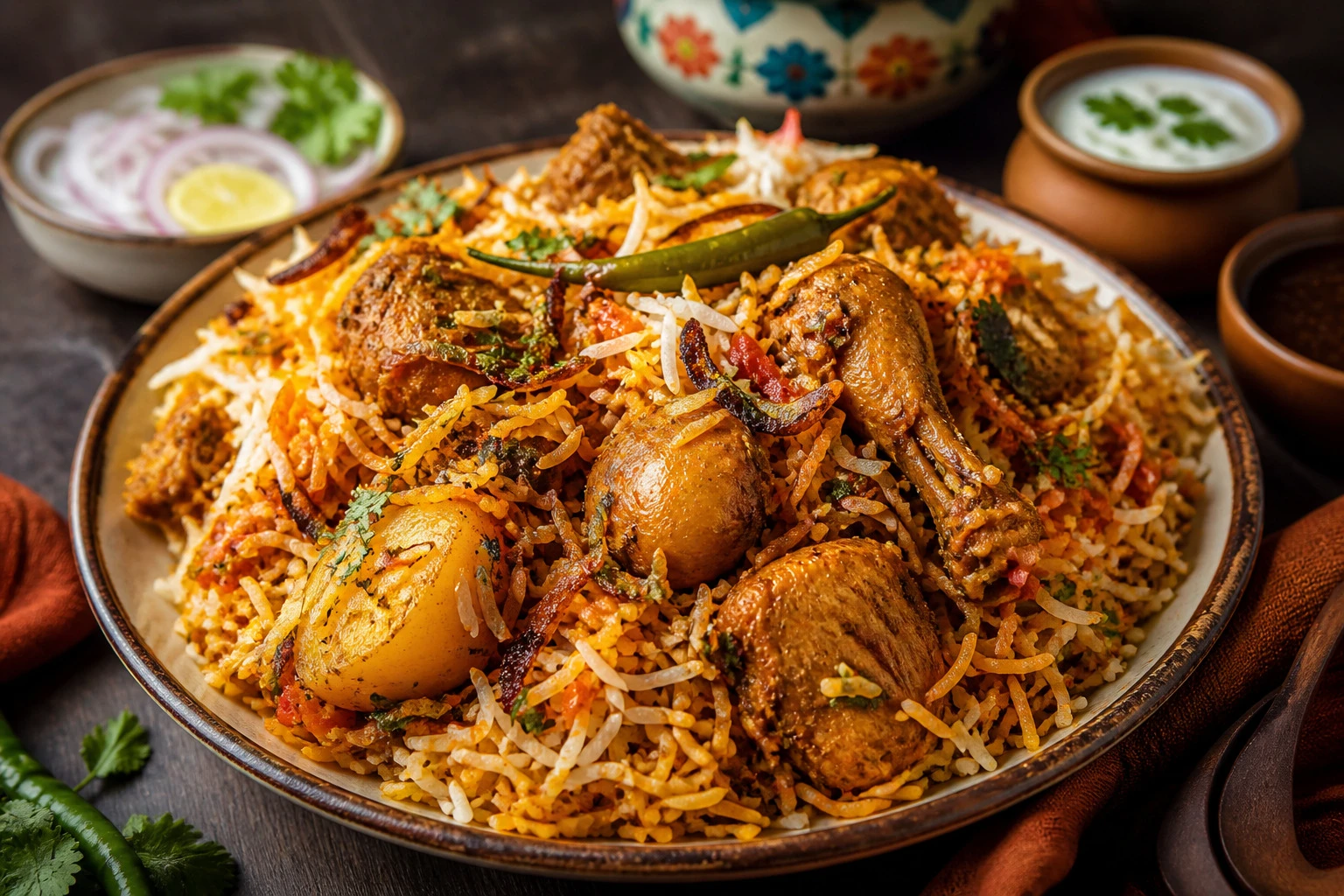
Sindhi biryani is not the kind of dish you eat quietly. It comes with heat, aroma, color, and that first spoonful that instantly wakes up your taste buds. One bite might be rich with masala, the next might surprise you with a soft potato, a burst of green chili, or the sweet-sour kick of aloo bukhara.
That is what makes Sindhi biryani so memorable. It is bold without being messy, spicy without being one-note, and comforting without feeling plain. Every layer brings something different, from fragrant basmati rice to tender meat, tangy yogurt, tomatoes, fried onions, fresh herbs, and deep spices.
It is more than just another Pakistani biryani style. Sindhi biryani has its own attitude, and that is exactly why it hits different every time.
Sindhi biryani stands out because it does not play safe with flavor. It is richer, sharper, and more intense than many other biryani styles. Instead of relying only on fragrance, it brings together spice, sourness, heat, and comfort in one layered dish.
What makes it different is the way each ingredient has a clear job:
The result is a biryani that feels bold but still balanced. It is not just spicy for the sake of being spicy. Sindhi biryani has layers of flavor, and that is why every plate feels exciting.
The real magic of Sindhi biryani comes from ingredients that do more than fill the pot. Each one changes the taste, aroma, or texture in a noticeable way.
Together, these flavors create the bold personality Sindhi biryani is known for. It is spicy, yes, but the tanginess, aroma, and texture are what make it unforgettable.
While all biryanis share a common base of rice, meat, and spices, the personality of each style is very different. Sindhi biryani, in particular, leans heavily into bold, tangy, and layered flavors.
| Biryani Style | Main Flavor Profile | What Makes It Unique |
|---|---|---|
| Sindhi biryani | Spicy, tangy, bold | Potatoes, aloo bukhara, strong masala, layered intensity |
| Hyderabadi biryani | Aromatic, balanced | Dum cooking with subtle spices and fragrant rice |
| Bombay biryani | Slightly sweet, tangy | Potatoes with a sweeter, lighter spice mix |
| Karachi-style biryani | Spicy, punchy | Street-style intensity with strong masala and oil |
What really sets Sindhi biryani apart is how forward the flavors are. It does not hold back. Where Hyderabadi biryani feels refined and balanced, Sindhi biryani feels expressive and bold. Bombay biryani may lean slightly sweet, but Sindhi biryani balances spice with tang instead.

If you enjoy food that has layers, contrast, and a bit of unpredictability, Sindhi biryani tends to stand out immediately.
One of the most interesting things about Sindhi biryani is that no two bites feel exactly the same. That is not a flaw—it is part of the experience.
This comes down to how the dish is layered and cooked.
When the rice and masala are combined, they are not fully mixed. Instead, they are layered and then cooked on dum (steam). This creates natural variation across the pot:
Even the bottom layer—often slightly more intense and oily—is loved by many for its deep flavor.
This variation keeps the dish exciting. It does not feel flat or predictable. Instead, every plate feels like a mix of textures and tastes, which is exactly why people keep going back for “just one more bite.”
Sindhi biryani is not just about flavor—it is deeply tied to tradition, gatherings, and shared moments. In many Pakistani homes, especially those with Sindhi roots, this dish carries a sense of identity and pride.
You will often find it at:
There is also something nostalgic about it. The smell of spices cooking, rice steaming on dum, and fried onions filling the kitchen often reminds people of home, childhood, and family traditions.

Unlike simpler rice dishes, Sindhi biryani feels like an event. It takes time, care, and attention. That effort is part of why it feels special every time it is served.
And because every household has its own slight variation—more spice here, more tang there—no two versions are exactly alike. That personal touch makes the dish even more meaningful.
Sindhi biryani is known for being bold and spicy, but that does not mean every version has to burn your mouth. The heat level can change depending on who is making it.
Restaurant-style Sindhi biryani is often stronger, oilier, and heavier on green chilies and red chili powder. Homemade versions are usually easier to adjust. Some families like it fiery, while others keep the spice balanced so the tanginess and aroma can shine too.
The best Sindhi biryani is not just hot. It has a mix of:
So yes, Sindhi biryani is usually spicy, but its real charm comes from balance. The heat matters, but it is the combination of masala, potatoes, herbs, yogurt, tomatoes, and aloo bukhara that makes it special.
Sindhi biryani already brings plenty of flavor on its own, but the right sides and serving style can make it even better.
A good plate of Sindhi biryani should feel complete: spicy, tangy, aromatic, fresh, and comforting all at once.
Sindhi biryani is not just another variation of a popular dish—it is an experience that stays with you. From its bold spices to its tangy depth and layered textures, every element works together to create something that feels rich, exciting, and deeply satisfying.
What truly makes Sindhi biryani stand out is how it refuses to be predictable. One bite is spicy, the next is tangy, then comes the comfort of a soft potato or the sweetness of aloo bukhara. That constant variation is exactly why it never gets boring.
It is a dish built on flavor, tradition, and personality. Whether it is served at a family gathering or enjoyed as a weekend treat, Sindhi biryani always brings more than just food to the table.
And maybe that is why it hits different every single time.
If you love exploring authentic flavors, check out our blog on 7 Regional Pakistani Foods That Deserve a Place on Your Table to discover more iconic dishes from across Pakistan.

Nigarish Nadeem is a passionate content writer and guest posting contributor who specializes in creating engaging, SEO-friendly content across multiple niches including technology, business, marketing, lifestyle, and digital trends. With a focus on quality writing and audience value, she helps brands improve their online visibility through informative and well-researched articles.
There’s something quietly powerful about a Pakistani dining table. It’s never just about
15 April 2026
Be the first to share your thoughts
No comments yet. Be the first to comment!
Share your thoughts and join the discussion below.