.png&w=3840&q=75)
* All product/brand names, logos, and trademarks are property of their respective owners.
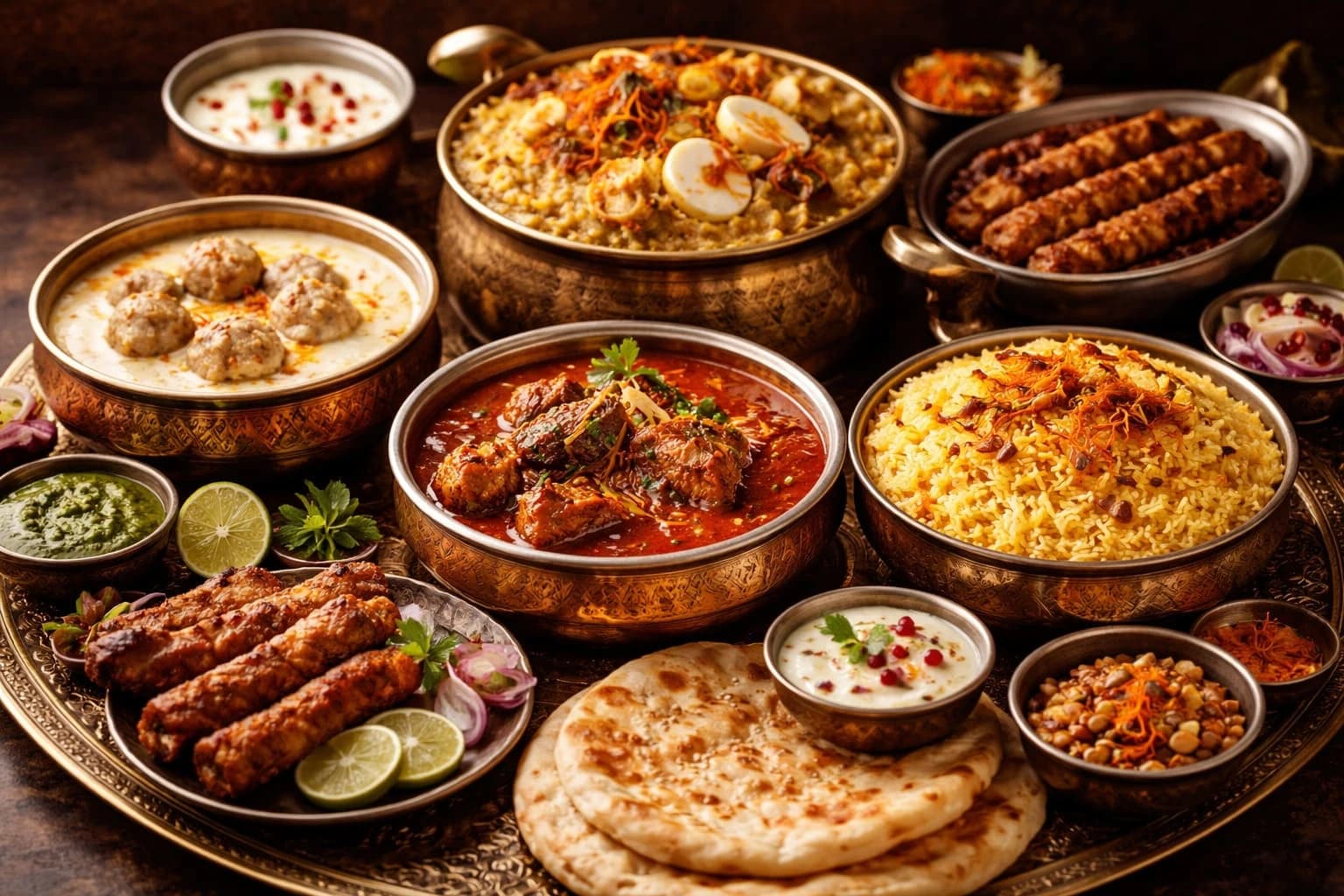
Punjabi food is more than something you order at a restaurant. It is tied to family, farming, hospitality, and the simple joy of feeding people well. When you eat like a local in Punjab, you quickly realize the food is not only rich in taste but also rich in meaning. Every meal feels generous, fresh, and full of life.
A lot of people think Punjabi food is only about butter chicken, naan, and heavy curries. That is only one side of it. Real local Punjabi food is often much simpler. A home meal may be fresh roti, daal, sabzi, yogurt, achar, and a glass of lassi. The beauty is not in making the meal overly fancy. The beauty is in freshness, warmth, and the way it is served.
Eating like a local also means understanding the rhythm of Punjabi meals. Breakfast is often strong and filling. Lunch is balanced and home-style. Dinner brings everyone together for a fuller meal and longer conversation. Food in Punjab is not rushed. It is shared, offered again, and enjoyed properly.
Below are some of the most loved foods that help you experience the real taste of Punjab.
Punjabi cuisine stands out because it is bold without losing its simplicity. The flavors are deep, but the ingredients are often very familiar. Onion, tomato, garlic, ginger, yogurt, fresh herbs, lentils, seasonal greens, flour, butter, and ghee are used in everyday cooking. The difference comes from technique, balance, and freshness.
Another big part of Punjabi cuisine is dairy. Butter, lassi, curd, paneer, and desi ghee are not side items here. They are central to the food culture. Even a simple meal can feel complete with homemade butter on hot roti or a cool glass of lassi beside a spicy dish.
Seasonality matters too. In winter, warm and hearty dishes become the focus. In summer, cooling drinks and lighter combinations appear more often. This gives Punjabi food a very natural feeling. It changes with the weather, the land, and the needs of the people eating it.
Most of all, Punjabi food reflects generosity. Portions are large, flavors are comforting, and meals are meant to be shared. That is why it leaves such a lasting impression.
In many Punjabi homes, breakfast is not light. It is often made to keep people full for hours. Stuffed parathas, yogurt, butter, chai, lassi, and sometimes chickpeas or halwa puri are common starts to the day.
Lunch is usually simpler and more practical. A regular plate may include roti, daal, one vegetable dish, curd or raita, salad, and achar. It is balanced food that feels homemade and satisfying without being too heavy.
Dinner is often the meal where the family sits together properly. There may be fresh roti, a lentil dish, a meat curry or paneer, some rice, and perhaps tea later in the evening. The food itself matters, but the shared experience matters just as much.
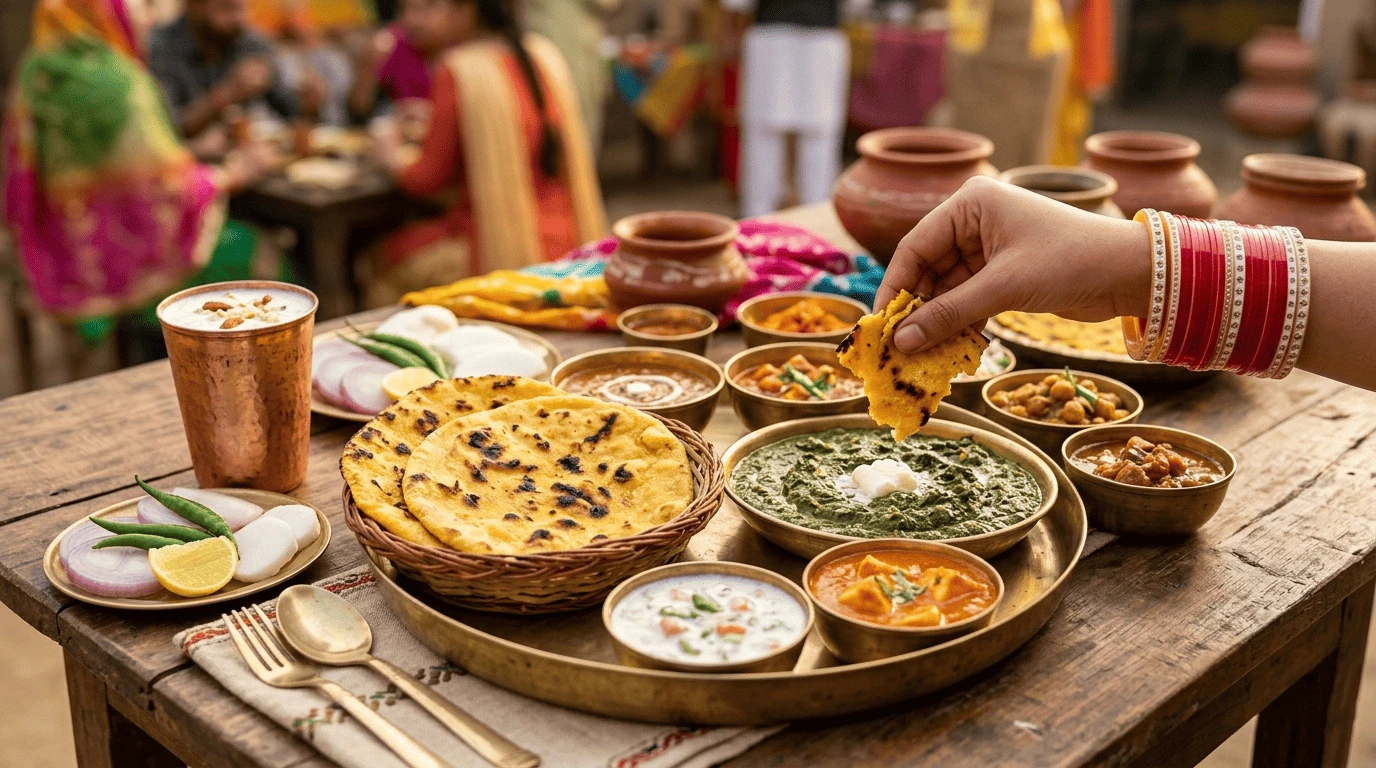
This is one of the most loved traditional dishes of Punjab, especially in winter. Sarson da saag is made from mustard greens cooked slowly until they become soft, earthy, and full of flavor. It is usually served with makki di roti, a cornmeal flatbread that has a rustic texture and comforting taste. Add a little butter on top, and the dish feels warm, simple, and deeply rooted in Punjabi village life.

Aloo paratha is one of the foods that truly shows how satisfying Punjabi breakfast can be. It is a flatbread stuffed with spiced mashed potatoes, then cooked on a hot griddle with butter or ghee. Locals usually eat it with yogurt, pickle, or homemade white butter. It is filling, flavorful, and the kind of meal that makes you slow down and enjoy the morning properly.

Dal makhani is one of the best examples of how Punjabi cuisine turns simple ingredients into something unforgettable. It is made with black lentils and usually cooked slowly for a long time to build a creamy, rich texture. In homes, it may be less heavy than restaurant versions but still deeply comforting. Eaten with roti or naan, it gives you that slow-cooked warmth that defines so much of Punjabi food.

Nihari is a slow-cooked meat stew known for its deep flavor and silky texture. In parts of Punjabi food culture, especially on the Pakistani side, it is often enjoyed early in the morning rather than at night. The meat cooks for hours, and the result is rich, warming, and satisfying. When eaten with naan or kulcha, it feels like a serious meal made for people who appreciate strong, traditional flavors.

Paya is another classic dish that shows the depth of Punjabi slow cooking. It is made by simmering trotters for a long time until the broth becomes thick, flavorful, and full of body. This is the kind of dish that people often grow up with, and it carries a strong sense of tradition. It may not be everyone’s first choice, but for locals, it is a cherished comfort food.

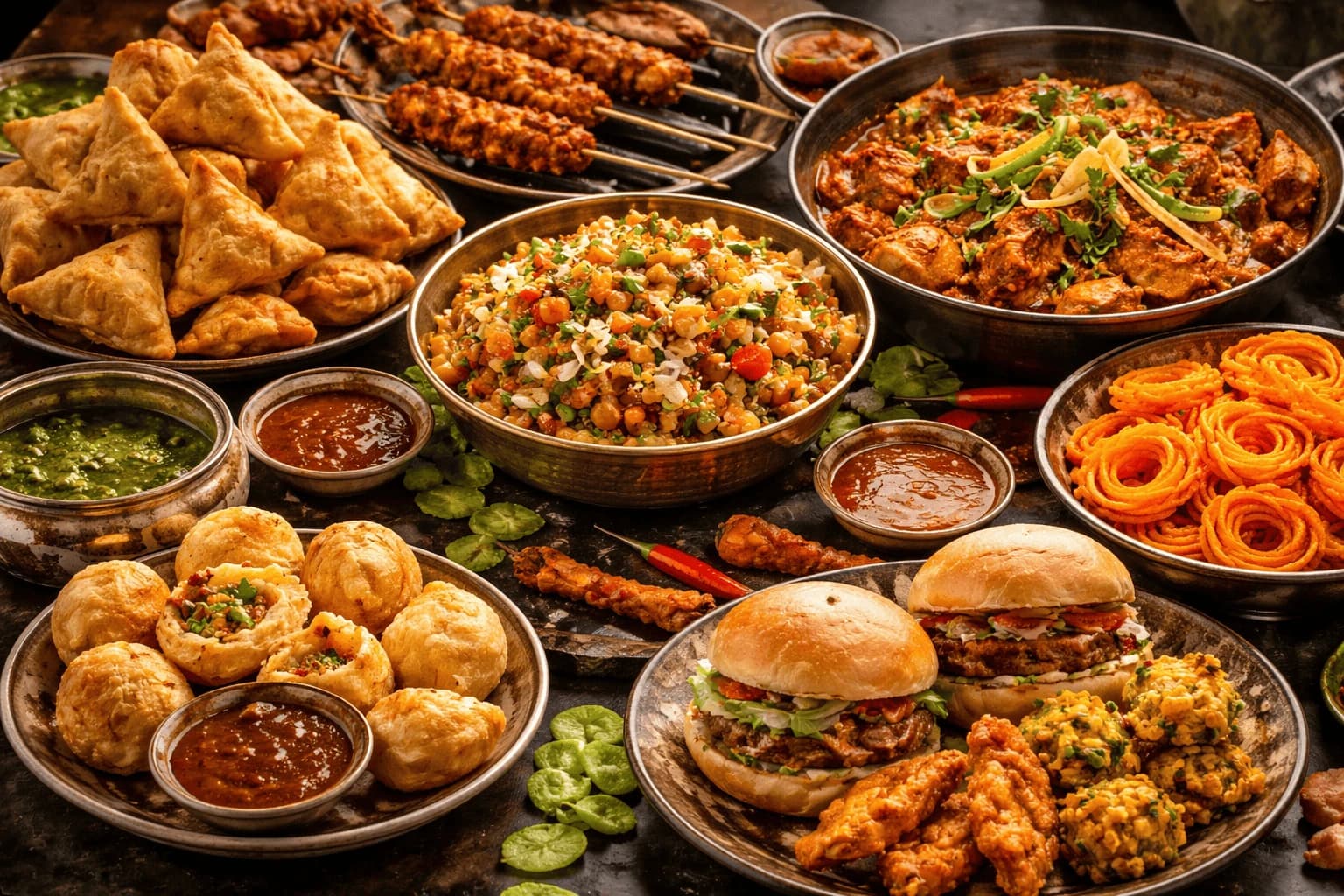
Amritsari kulcha is one of Punjab’s most famous breads, but when eaten fresh in the right place, it becomes much more than just bread. It is usually stuffed, baked until crisp on the outside, and served hot with chole, chutney, onions, or yogurt. The outer layer has a slight crunch, while the inside stays soft and flavorful. It is especially loved as a street food and breakfast option.

Paneer plays a big role in Punjabi vegetarian cooking because it is rich, satisfying, and easy to pair with spices and gravy. Whether served as paneer masala, paneer bhurji, or homemade paneer curry, it gives vegetarian meals the same heartiness people expect from Punjabi food. At home, paneer dishes are often simpler and fresher than restaurant versions. They are especially popular for family meals and special gatherings.

Lassi may be a drink, but in Punjab, it deserves a place among the most important foods. Made from yogurt and served sweet or salty, it cools the body and balances heavier meals beautifully. In many homes and roadside eateries, lassi comes in a large glass and feels almost like part of the meal itself. It is refreshing, filling, and one of the easiest ways to experience local Punjabi food culture.

No Punjabi meal feels complete without fresh bread. Roti is the everyday favorite, paratha is often linked with breakfast, naan appears more often in restaurants or special meals, and kulcha brings its own distinct texture and flavor. Makki di roti becomes especially important in winter.
Sides also matter more than people expect. Achar brings heat and tanginess. Chutney adds freshness. Raw onions and green chilies sharpen the plate. Yogurt or raita cools everything down and balances rich dishes naturally. These small additions may seem minor, but they help create the full Punjabi eating experience.
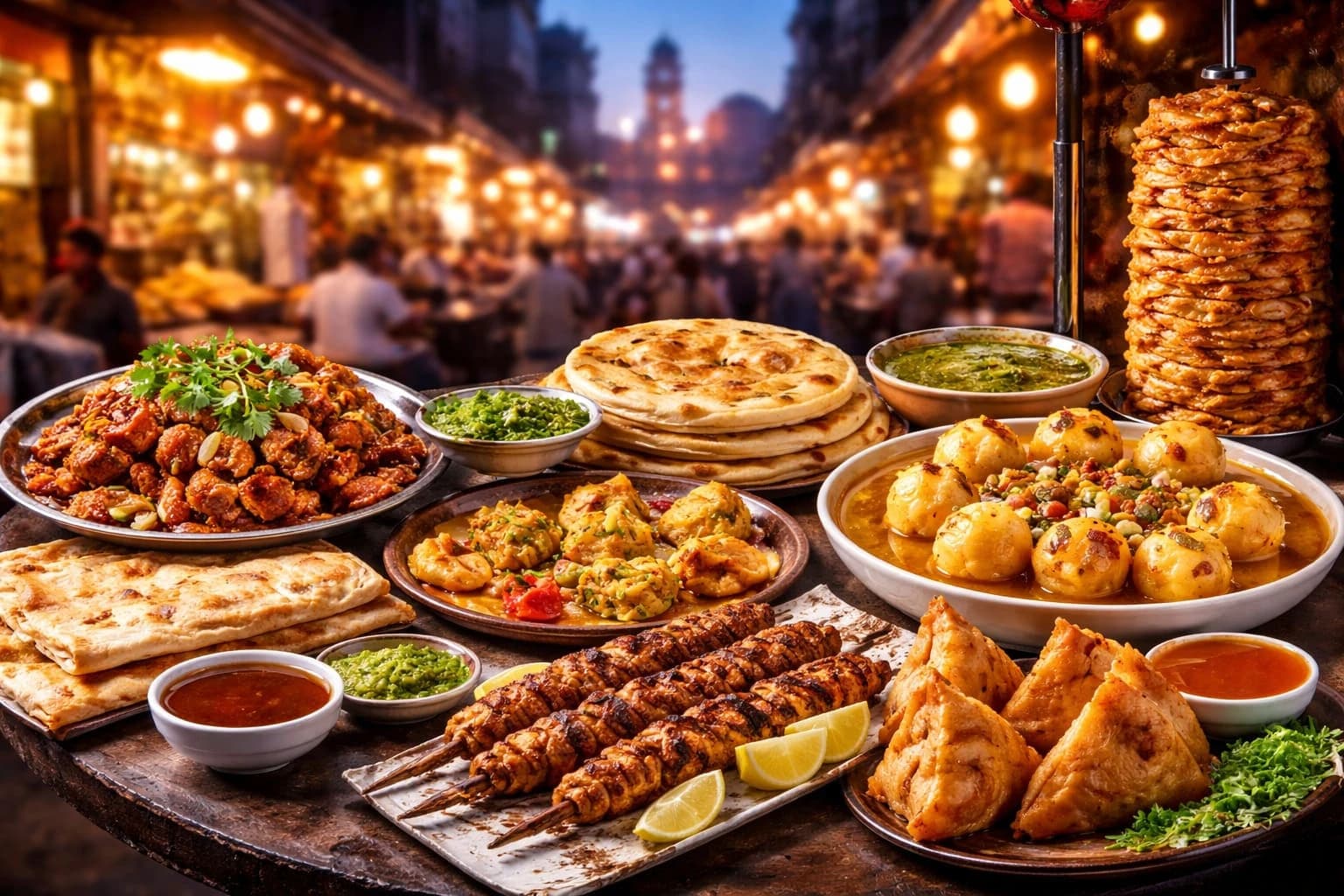
This is one of the most important things to understand if you really want to eat like a local. Restaurant Punjabi food is often richer, thicker, creamier, and heavier. It is designed to impress quickly. That is why dishes like butter chicken, paneer butter masala, and butter naan became so popular.
Local Punjabi food is different. It is usually simpler, fresher, and more balanced. It depends less on cream and oil and more on timing, technique, and quality ingredients. A homemade meal of roti, daal, sabzi, and curd may look basic beside a restaurant platter, but it often gives a more honest and complete picture of Punjabi cuisine.
So if your goal is authenticity, do not only chase famous menu items. Pay attention to the foods people actually eat at home.
In Punjab, food is one of the strongest expressions of love and care. Guests are welcomed with tea, snacks, or full meals even if they did not arrive at mealtime. And once the food is served, you are usually encouraged to eat more than you planned.
This generosity is part of the culture. A hot roti served straight from the pan, a second helping placed on your plate without asking, and a full glass of lassi in front of you all say the same thing: you are welcome here.
Meals are also highly social. Families often gather around dinner, talk over food, and eat together instead of treating meals as something rushed or separate. That shared spirit is one of the reasons Punjabi cuisine feels so memorable.
To understand Punjabi traditional cuisine, you have to experience more than just its famous dishes. You have to notice the fresh breads, the slow-cooked lentils, the warming winter saag, the generous breakfasts, and the hospitality that surrounds every meal. That is what it really means to eat like a local.
Punjabi food is loved because it is full of flavor, but also because it feels personal. It reflects the land, the seasons, the family table, and the habit of feeding people with warmth and pride. Some meals are rich and festive, while others are simple and daily, but both are equally important.
If you want the most authentic experience, look beyond the restaurant version of Punjabi food. Sit down for a home-style meal, enjoy it slowly, and let the culture around the food speak for itself. That is where Punjab truly lives — in the taste, the generosity, and the feeling that no one should ever leave hungry.

No bio available yet.
Multan is a city that speaks through its food. Known for its saints, shrines, bazaars, and warm hosp
25 April 2026
The taste of Khyber Pakhtunkhwa is not built on complexity. It comes from simple ingredients, slow c
22 April 2026
Eid al-Adha is not just about sacrifice—it’s about togetherness, generosity, and the joy
20 April 2026
Be the first to share your thoughts
No comments yet. Be the first to comment!
Share your thoughts and join the discussion below.