.png&w=3840&q=75)
* All product/brand names, logos, and trademarks are property of their respective owners.
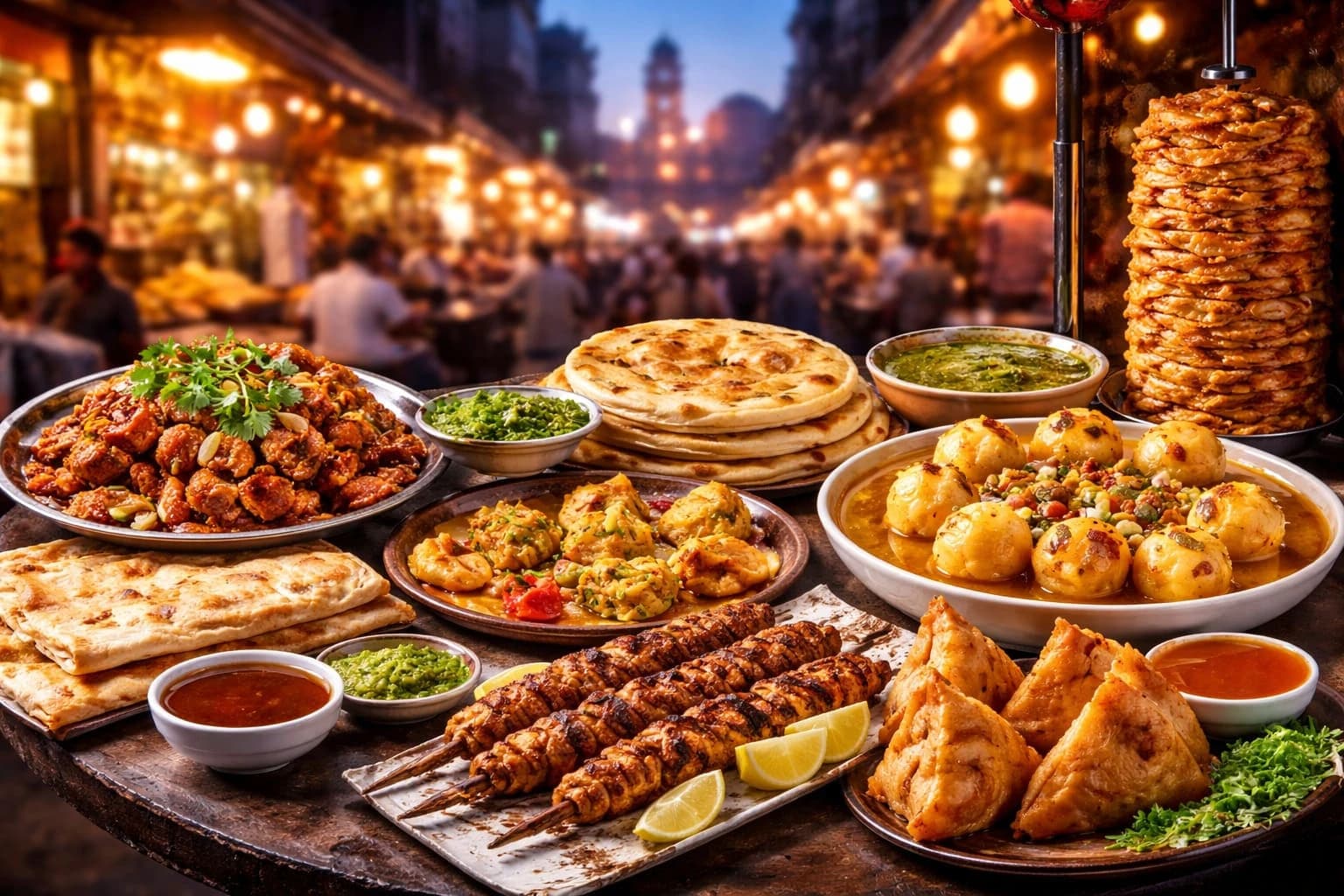
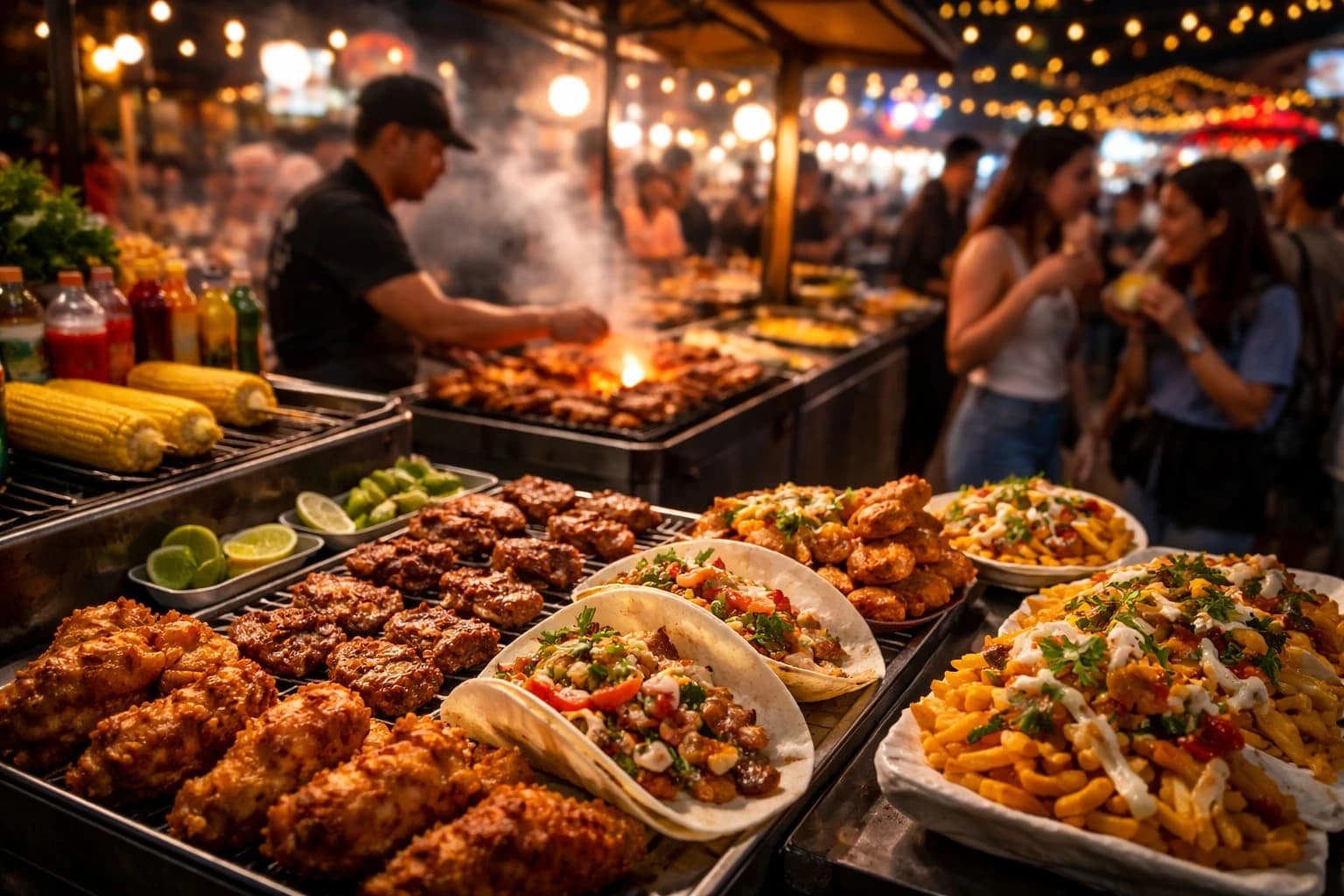
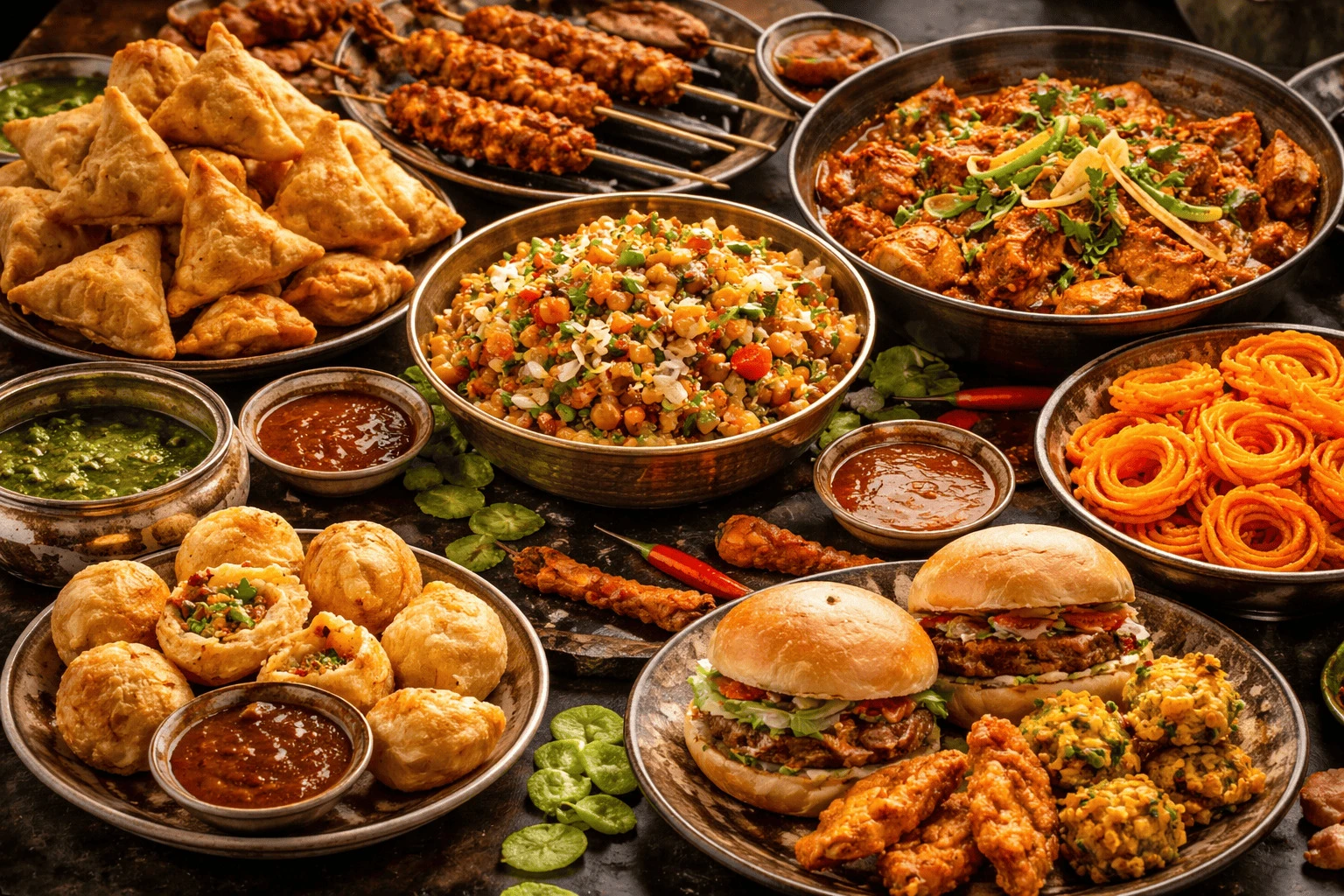
There is something special about the way food lives on the streets of Pakistan. It is not only about hunger. It is about the sound of oil sizzling at a roadside stall, the smell of charcoal smoke in the evening air, and the excitement of eating something hot, spicy, and freshly made in the middle of a busy crowd. That is exactly what makes Pakistani street food so memorable.
From crispy snacks and tangy chaat to rich meat dishes and sweet treats, street food in Pakistan reflects the country’s love for bold flavor and shared food experiences. These dishes are affordable, full of character, and deeply connected to local culture. Some are quick bites eaten on the go, while others are part of family routines, weekend breakfasts, or late-night food trips with friends.
In this blog, we will look at 9 traditional Pakistani street foods that truly define local flavor and show why they continue to hold a special place in everyday life.
If there’s one street food that captures instant excitement, it’s gol gappa. You don’t sit down to eat it—you stand by the cart, waiting your turn, watching the vendor quickly fill each crispy shell and hand it over one by one.
The experience is fast, messy, and completely worth it.
Each gol gappa bursts in your mouth with a mix of spicy water, tangy chutney, and soft chickpeas or potatoes. It’s the kind of snack that makes people compete over who can handle the most spice.
Gol gappa isn’t just food—it’s a shared moment. Friends gather around, laughing between bites, often challenging each other to try the spiciest version.

Bun kebab is often called Pakistan’s version of a burger, but it has its own personality. It’s simpler, messier, and packed with flavors that feel completely local.
You’ll usually spot bun kebab stalls surrounded by people grabbing a quick bite on the go. The vendor fries a kebab on a hot griddle, cracks an egg over it, and stacks everything inside a soft bun with chutneys and onions.
It’s quick, filling, and incredibly satisfying.
Unlike a typical fast-food burger, bun kebab feels more homemade and raw in the best way. It’s not about presentation—it’s about taste and comfort.

Chaat is not just one dish—it’s a whole category of street food that brings together bold flavors in the most exciting way. Every bite feels different, and that’s exactly the point.
Whether it’s aloo chaat, papri chaat, or fruit chaat, the magic lies in how sweet, spicy, tangy, and crunchy elements come together at once. It’s chaotic in the best way possible.
You’ll often see chaat stalls crowded in the evenings, especially during Ramadan, when people look for something light yet flavorful to break their fast.
Chaat is for people who enjoy layers of flavor in a single bite. It’s not neat, it’s not simple—but that’s exactly why it stands out on the streets of Pakistan.

As the sun starts to set, the smell of frying snacks begins to fill the air across streets in Pakistan. That’s usually your cue—samosas and pakoras are ready.
These are the go-to evening snacks, often enjoyed with a cup of hot chai. Whether it’s a quick roadside stop or a family gathering at home, these crispy bites are always part of the moment.
Samosas come neatly folded and filled, while pakoras are more irregular, each piece slightly different. But both deliver the same comfort—warm, crunchy, and full of flavor.
There’s something comforting about holding a hot samosa or pakora while standing at a stall, watching more batches being fried right in front of you. It’s simple food—but it never gets old.

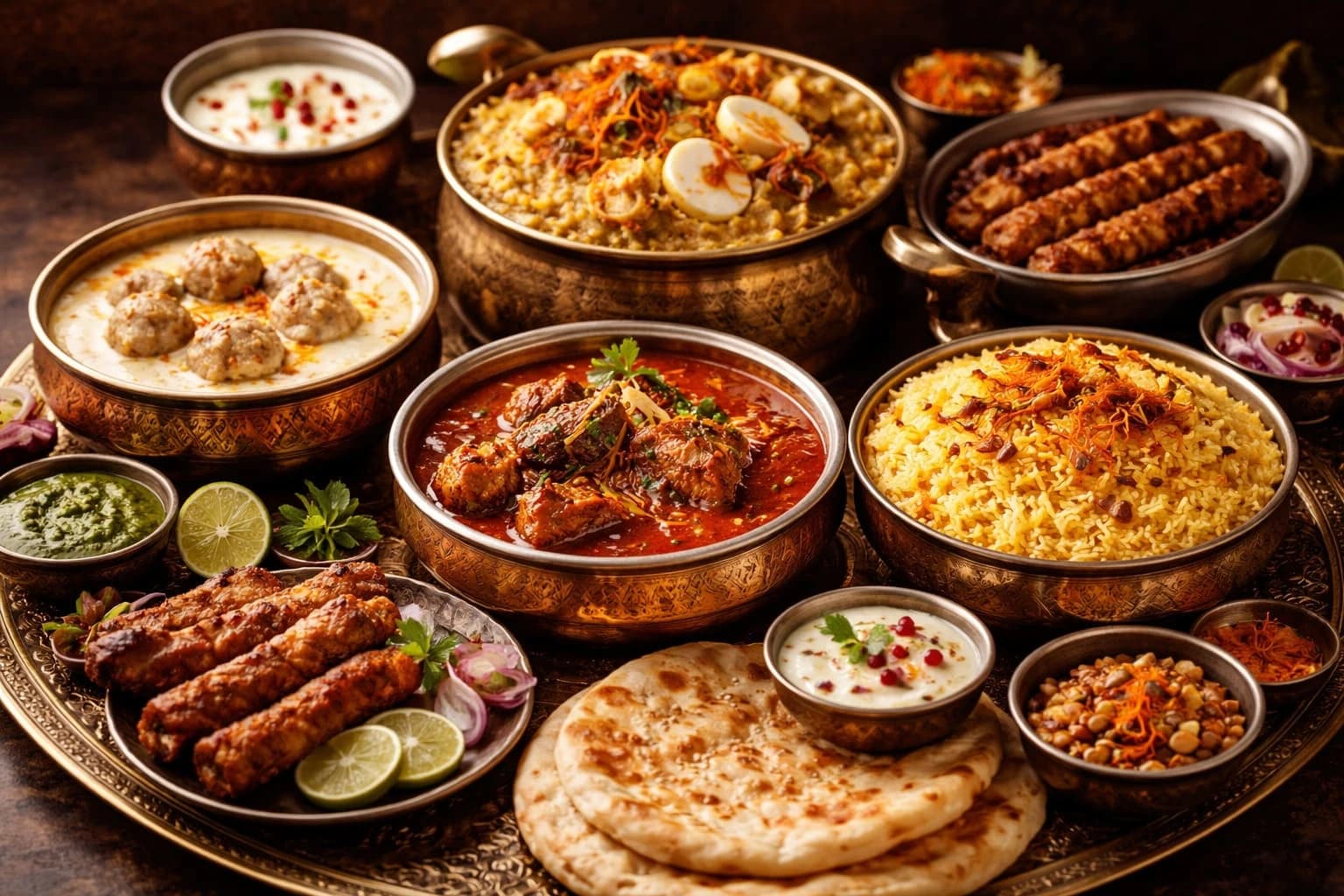
Nihari brings a different side of Pakistani street food to the table. It is not light, crispy, or quick like many roadside snacks. It is rich, slow-cooked, deeply spiced, and full of comfort.
Traditionally eaten as a breakfast dish, nihari has a strong place in local food culture, especially in older parts of cities where people line up early for a fresh, steaming plate. The gravy is thick and full of flavor, and the meat is cooked until it becomes tender enough to fall apart with almost no effort.
This is the kind of dish that asks you to slow down and enjoy it properly.
What makes nihari stand out on the street is the way it turns a simple meal into an experience. The fresh garnish, the hot naan, and the aroma rising from the bowl all come together in a way that feels unforgettable.

There’s something hard to ignore about the smell of seekh kebabs cooking over open flames. You can usually sense them before you even see the stall. The smoke, the sizzling sound, and the constant turning of skewers create a scene that pulls people in.
Seekh kebabs are made from minced meat mixed with spices, shaped onto long skewers, and grilled over charcoal. The result is juicy on the inside with a slightly crisp, smoky layer on the outside.
They’re often served fresh off the grill, wrapped in naan or paired with chutney and onions.
Seekh kebabs are more than just food—they’re part of the street atmosphere. People gather around the grill, watching each batch cook, waiting for their turn to grab a hot, freshly made serving.

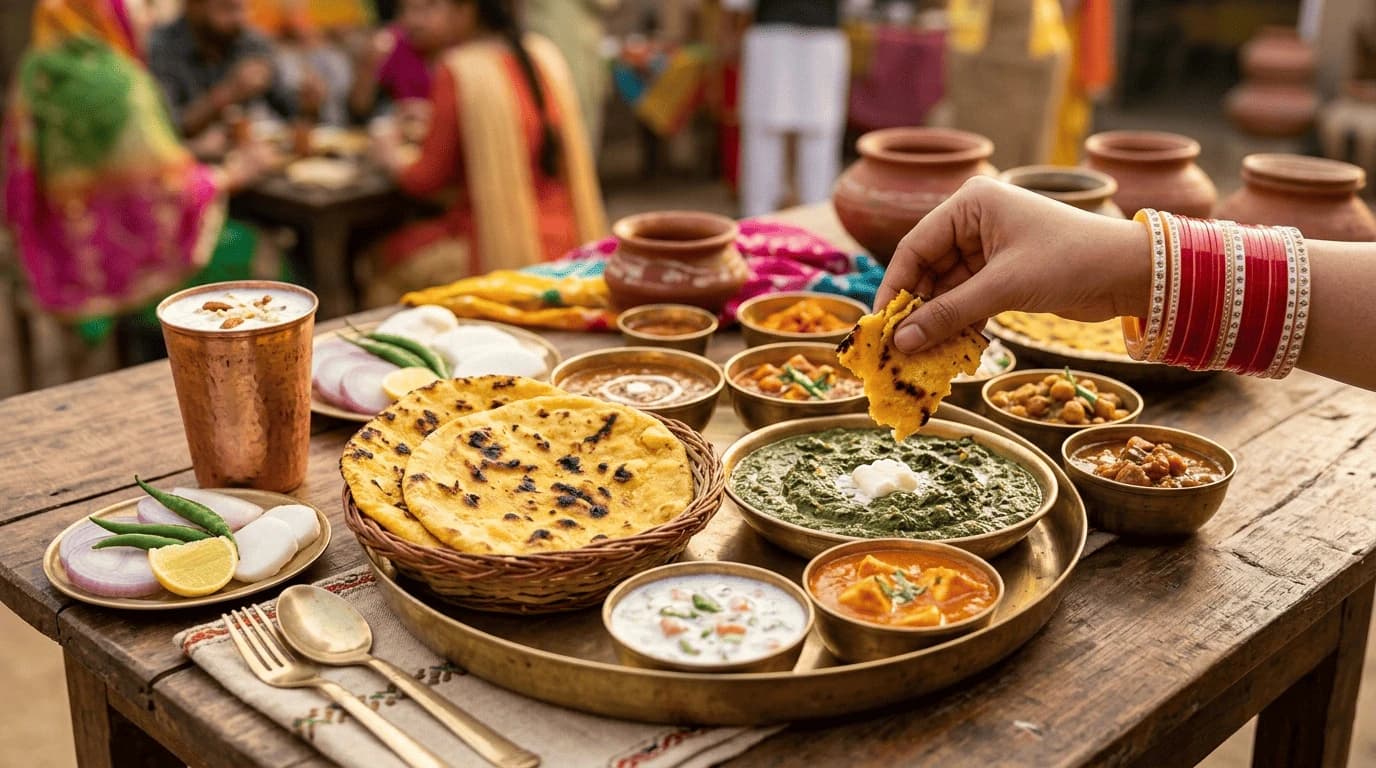
Halwa puri is more than just food—it’s a full experience that usually begins on slow weekend mornings. Streets and small eateries come alive early as families and friends gather to enjoy this traditional breakfast together.
The combination might sound unusual at first: sweet halwa paired with spicy chickpea curry and fluffy puris. But once you try it, the balance makes perfect sense.
The puris are deep-fried until they puff up into golden, airy breads, served hot alongside rich halwa and flavorful chana. It’s a mix of sweet and savory that feels both indulgent and comforting.
Halwa puri isn’t rushed. People sit, eat, talk, and enjoy the moment. It’s one of those meals that turns a simple morning into something memorable.

Jalebi is one of those street foods you can recognize instantly—even from a distance. The bright orange spirals, the sizzling oil, and the sweet aroma drifting through the air make it almost impossible to walk past without stopping.
Fresh jalebis are made right in front of you. The batter is piped into hot oil in circular shapes, fried until crispy, and then soaked in sugar syrup while still hot. The result is a perfect balance of crunch and sweetness.
People often enjoy jalebi as a quick dessert, a morning treat, or even alongside savory breakfasts like halwa puri.
Jalebi isn’t just about taste—it’s also about the visual and sensory experience. Watching it being made is part of the fun, and eating it fresh makes all the difference.

After all the spice, heat, and bold flavors of Pakistani street food, lassi comes in as a much-needed balance. It’s simple, refreshing, and deeply satisfying—especially on a hot day.
In busy food streets, lassi shops are easy to spot, with large containers lined up and servers pouring thick, creamy drinks non-stop.
Lassi isn’t just a drink it’s part of the overall street food experience. It refreshes you, slows things down, and perfectly rounds off a flavorful food journey.

Pakistani street food is not just about what’s on the plate—it’s about the energy, the people, and the moments shared around it. From the spicy kick of gol gappa to the comforting richness of nihari and the sweetness of jalebi, every dish tells its own story.
What makes Pakistani street food truly special is its variety and authenticity. It brings together different flavors, textures, and traditions in a way that feels both exciting and familiar at the same time.

No bio available yet.
If you have ever stood near a sizzling street stall in Lahore or walked through the smoky food lanes
29 April 2026
Lahore does not just feed you. It follows you home.
20 April 2026
There’s been a quiet shift in how people experience food. Not long ago, excitement meant white
8 April 2026
Be the first to share your thoughts
No comments yet. Be the first to comment!
Share your thoughts and join the discussion below.